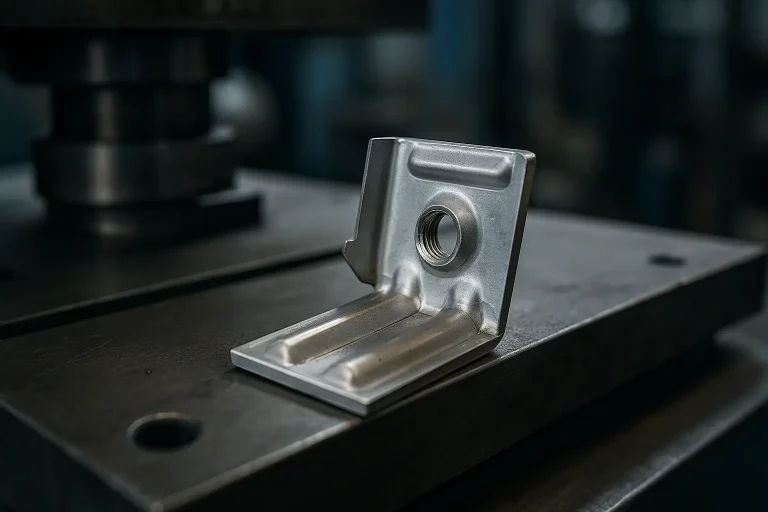
Stamping is a metal part manufacturing process that involves using a press to form metal materials with dies and punches. It is a popular method for producing complex and precise shaped parts, such as computer casings, car parts, construction components, etc.
Stamping is a process that plays a crucial role in the metalworking industry by enabling the production of high-quality parts at a reasonable cost. It is also used for the mass production of parts, making it an efficient way to meet the needs of the automotive, aerospace, electronics, and construction industries. Furthermore, the stamping technique also allows for material and time savings compared to other sheet metal part manufacturing methods. Discover in this article the essentials of metal part manufacturing using the sheet metal stamping method.
How the stamping process works
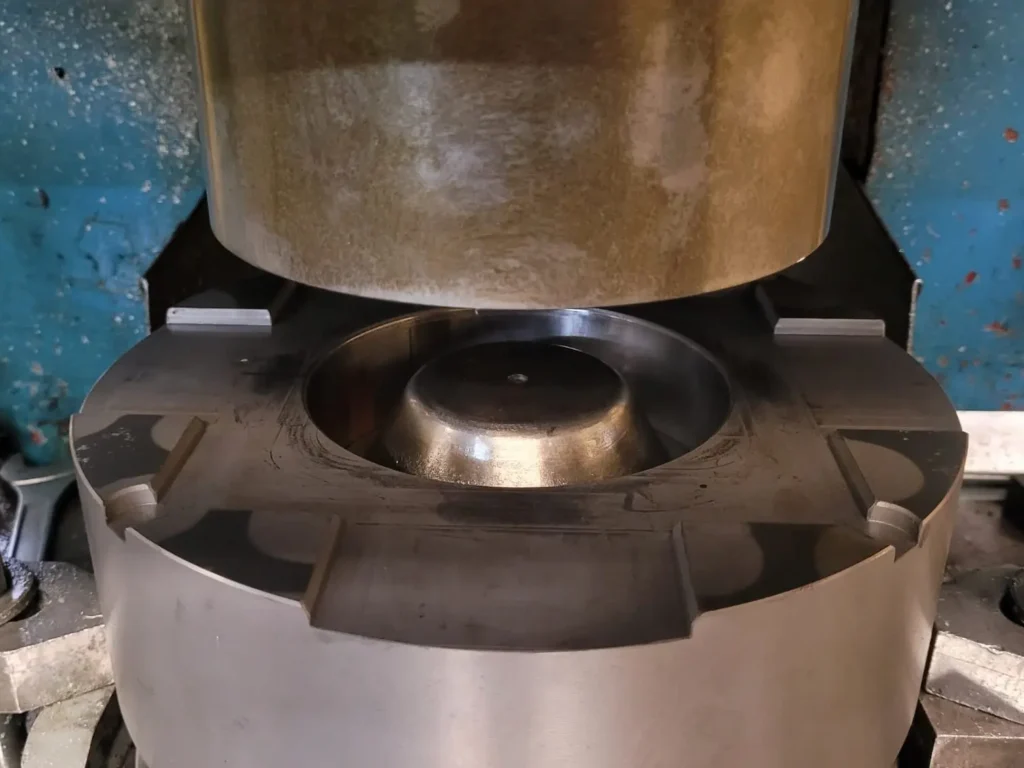
Stamping is an operation that involves using a press and a die to shape metal materials with dies and punches. There are several steps involved in the stamping technique, which generally include:
Phase 1 – Metal Sheet Preparation:
The first step involves cutting the metal sheet to the appropriate size, dimension, thickness, and shape for the stamping process.
Phase 2 – Placing the Metal Sheet in the Press and Tooling
The surface of the metal sheet is placed between the press’s dies and punches, which are used to shape the part. Additionally, a blank is also used between the part and the die to allow for the part’s deformation.
Phase 3 – Deformation
The press is activated to shape the part using dies and punches. The dies and punches can be designed to create specific shapes, such as holes, notches, grooves, etc. In addition, the blank holder helps to hold the blank during this phase. It is generally used for parts with more complex shapes that require better retention. Blank holders are typically tools made from hardened steel to withstand the high stamping pressures.
Phase 4 – Part Removal
Once the part has been formed, it is removed from the press.
Phase 5 – Finishing
The part may undergo a finishing treatment to smooth the edges, remove shear marks, etc.
There are different types of presses used for the stamping technique, including hot stamping presses, cold stamping presses, and combined stamping presses. Hot stamping presses are used to work metals at high temperatures, while cold stamping presses are used to work metals at lower temperatures. Combined stamping presses can be used for both types of metal processing.
The materials used for stamping are generally metals such as steel, aluminum, copper, brass, etc. However, other materials such as plastics can also be stamped.
Applications of the Stamping Technique in Industry
Stamping is a method for manufacturing a wide variety of steel or other parts for different applications. Here are some examples of parts manufactured using the stamping technique:
- Computer casings and electronic enclosures
- Car parts such as transmission housings, engine covers, handbrake housings, etc.
- Construction components such as ceiling panels and roofing sheets
- Industrial machine parts such as gears, bearings, supports, etc.
Stamping is a method particularly used in the automotive industry for the design of sheet metal parts such as transmission housings, engine covers, handbrake housings, engine mounts, air filter housings, etc. These parts are crucial for the proper functioning of vehicles and must meet high quality standards.
Aerospace is another sector that widely uses stamping for the production of sheet metal parts such as control housings, radar housings, electronic equipment housings, etc. These parts are subject to high weight and mechanical resistance constraints to ensure aircraft safety.
Advantages of the Stamping Process
Stamping is a manufacturing process used to create metal parts by utilizing tooling called a die and a press. It offers many advantages, particularly in terms of material savings, part precision, and production speed.
First, stamping allows for significant material savings. By using a die to shape the part, it is possible to create parts with very precise shapes, which helps to minimize material waste. Furthermore, stamped parts can be designed to be very strong, allowing for less material to be used to create more robust parts.
Next, stamping offers very high part precision. The dies used to create the parts are manufactured from very precise tools, which allows for the creation of parts with very tight tolerances. This is particularly important for parts that must fit perfectly into one another, such as engine parts.
Finally, stamping is a fast production process. This is particularly useful for vehicle parts, for example. Note that large-scale projects require large stamping presses. These can be platen presses or rod presses. They have a force capacity ranging from tens of tons to a hundred tons.
In summary, stamping is a highly efficient manufacturing process that allows for the creation of parts with high precision, high resistance, and high production speed. It is an essential process for the production of many mechanical and electronic products. It is also used for the mass production of parts for the automotive, aerospace, railway, electronics, home appliance industries, etc.