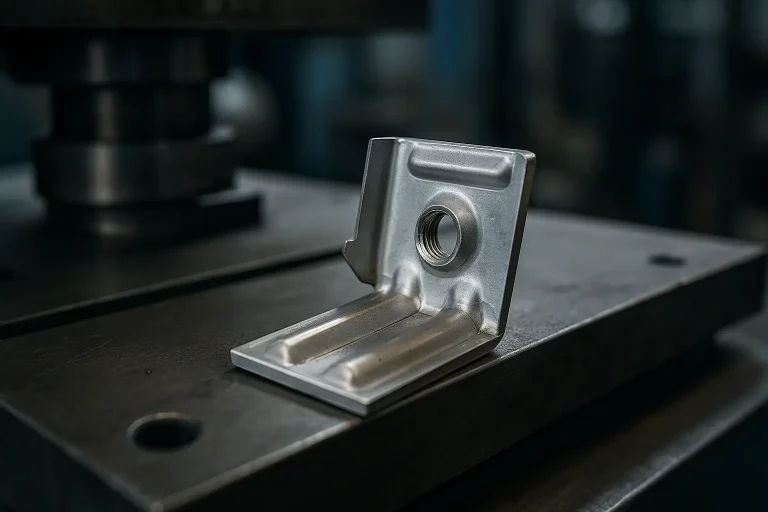
Just like aluminum stamping, steel stamping is found in various industrial sectors such as primarily the automotive industry, but also in metal construction and many other markets.
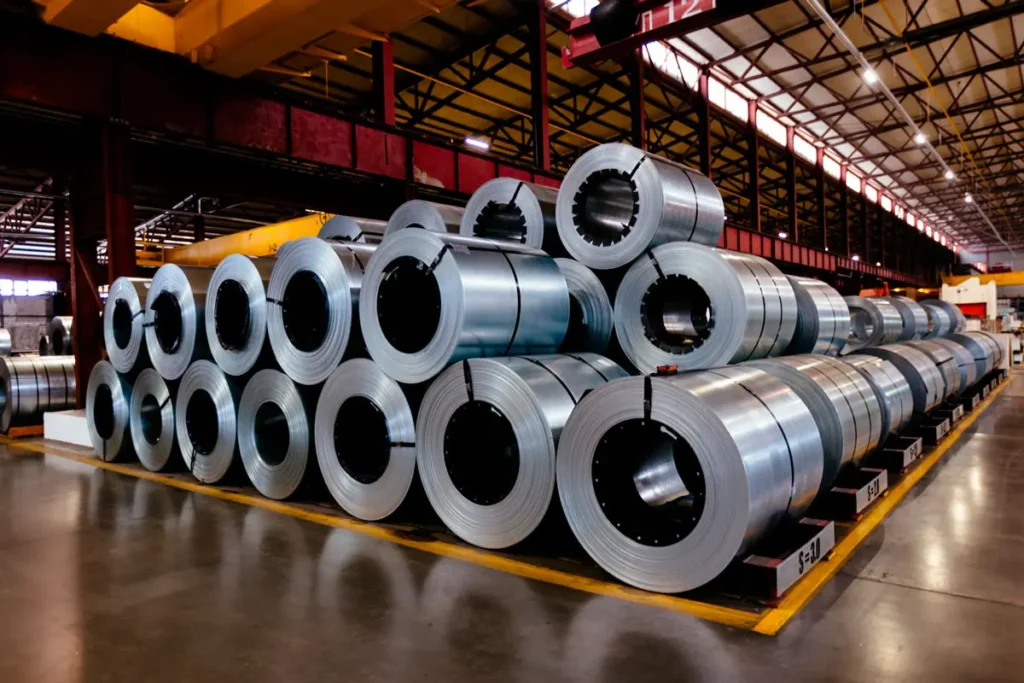
Steel is the most used metal in stamping
Indeed, steel accounted for 91.7% of the volume of the global sheet metal market in 2018. In terms of revenue, steel holds the largest share of this market, amounting to 69.3% in 2018.
In this article, you will discover the application areas of steel stamping, as well as the finished products obtained through this process and its properties.
Stainless steel in stamping
Stainless steel (inox) is an alloy that contains approximately 18% chromium. This content makes this metal both highly corrosion-resistant and visually appealing. Stainless steel is often more expensive than other alloys, but its corrosion resistance justifies the investment. This durable metal has good tensile strength and retains its properties even under extreme temperatures. Stainless steel is stronger, easier to clean, and maintain than carbon steel.
Carbon steel
Carbon steel materials are available in flat sheets and coils. The metal’s composition differs from stainless steel, as it contains 2.1% carbon by weight and has lower ductility and offers less corrosion resistance. Carbon steel offers several advantages for metal stamping, including being a low-cost material with good strength.
Alloy steels in stamping
Alloy steels are manufactured with different types of elements such as copper, titanium, nickel, aluminum, and manganese, which can modify the properties of steel. Some of these alloys can contribute to the overall strength, workability, weldability, and overall corrosion or wear resistance of the metal stamping material.
Alloy steels are commonly used for a variety of parts, including transformers, electric motors, pipelines, and automotive parts.
What are the industrial sectors and finished products made from steel stamping?
Steel stamping in the automotive industry
The demand for automotive part stamping worldwide was estimated at over $20 billion in 2015 and is expected to reach over $112 billion by 2024 (“Research and Markets” report, 2016). Furthermore, the demand for parts in the automotive sector is such that it alone influences the entire global sheet metal market.
Moreover, automotive stamping allows for the manufacturing of numerous functional parts, primarily made of steel. They are used in bodywork, chassis, electrical and steering systems, alternators, as well as radiator supports, roof crossmembers, roll bars, and engine frames and mounts. These components play a crucial role in ensuring optimal vehicle safety and functionality.
Furthermore, the automotive industry is a particularly demanding market for subcontractors. The latter must take into account the following trends:
- Emphasis on low manufacturing cost.
- Particular attention to the quality of finished products.
- Increasing use of alloys such as titanium, aluminum, cast iron, and forged steel in engines.
Steel stamping in the metal construction market
As with the automotive industry, steel stamped parts are also highly demanded in metal construction. Indeed, an industrial building is composed of 50% steel, from foundations to roofing.
In terms of volume, the construction market represented 54.9% of sheet metal demand in 2018, making it the second-largest sector demanding stamped parts.
In the metal construction industry, stamped parts are found in roofing, chimney flues, hangars, gutters, gates, plumbing, and large-scale structures such as bridges, pylons, etc.
Given that these pieces of equipment are often exposed to harsh environments, such as extreme temperatures, impacts, vibrations, etc., this sector relies on high-quality stamped parts capable of withstanding these conditions.
Consequently, this market is characterized by its use of stamped parts made from galvanized steel (zinc coating) to prevent rust and corrosion for as long as possible. Indeed, this material has exceptional corrosion resistance.
Steel stamping in the food industry, chemistry/pharmaceuticals, and everyday objects
In these sectors, stamped parts must notably adapt to significant hygiene standards. Thus, stainless steel sheets are predominantly used, such as in the manufacturing of utensils and cookware, including sinks, grills, stoves, and pots.
Manufacturers also use them for dishwashers, countertops, refrigerators, and washing machines.